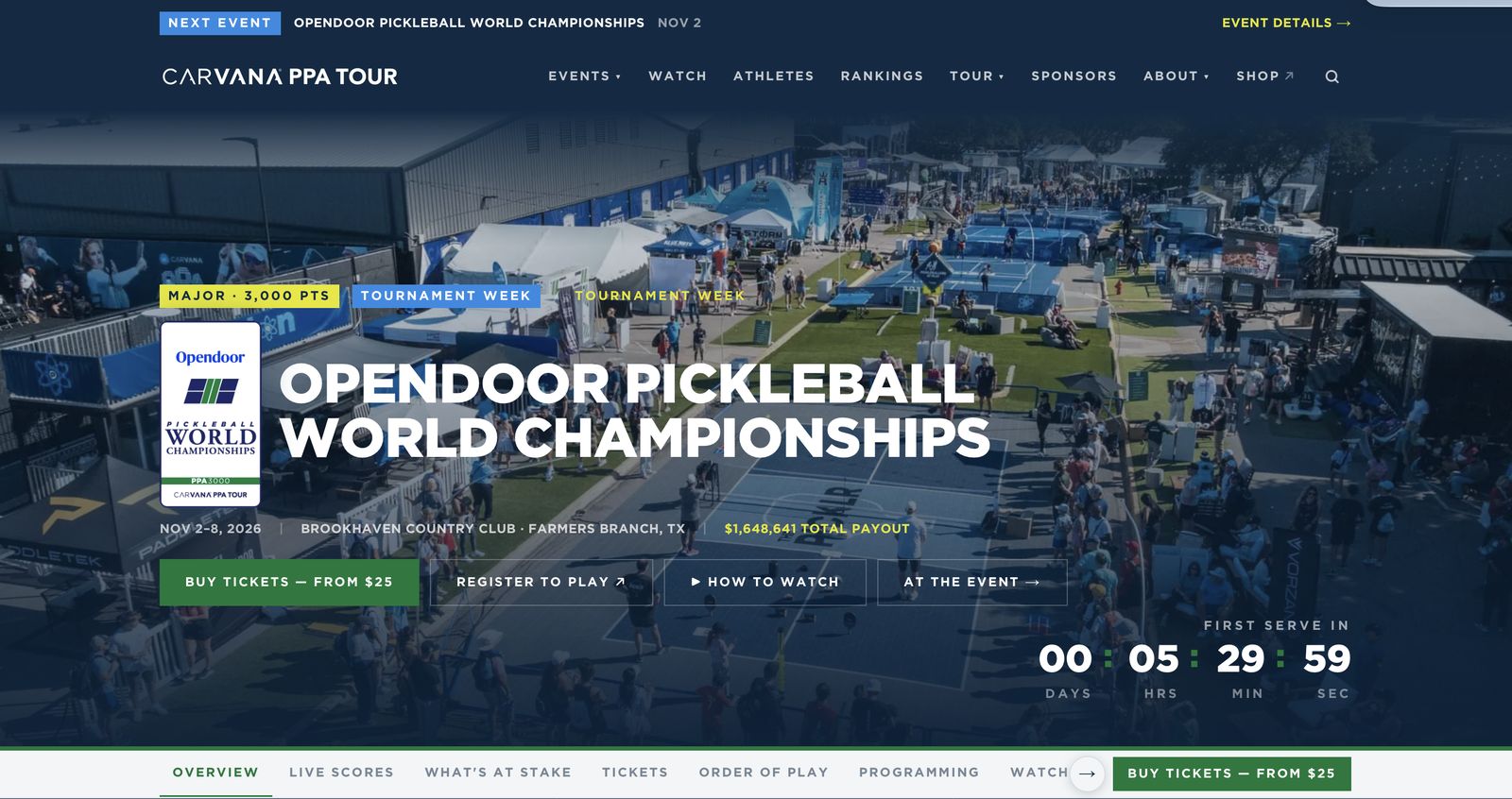
This week, the best pickleball players on the planet are playing a few miles from our office. The Opendoor Pickleball World Championships are at Brookhaven Country Club in Farmers Branch, November 2 through 8, 2026. The Carvana PPA Tour calls Worlds its biggest event of the year, with more ranking points on the line than any other stop.
I love seeing it. Pickleball gets people moving, competing and laughing with friends. About 24.3 million Americans played in 2025, and participation has grown 479% since 2020, according to the Sports & Fitness Industry Association.1
But I'm an orthopedic surgeon, so I also see the other side. I played four seasons of professional baseball in the Baltimore Orioles organization. I know what quick stops, hard lunges and diving for a ball can do to a body. Pickleball asks for a lot of those same moves, often from players who started the sport later in life.
At Texas Orthobiologics, we have helped pickleball players with injuries avoid surgery and get back on the court with PRP injections. Every patient is different, and results vary.
Here's what the newest research says about pickleball injuries, and what you can do to stay on the court.
Pickleball Injuries Are Rising Fast
As more people play, more people get hurt. US emergency room visits for pickleball injuries grew from about 1,300 in 2014 to about 24,500 in 2023.2 Between 2020 and 2022 alone, those ER visits rose 91%, and hospital admissions rose 257%.3
A few patterns stand out:
- Falls cause most ER visits. Falls caused about two out of three pickleball injuries seen in emergency rooms from 2013 to 2022.4
- Age matters. Most injured players are 60 to 79 years old.2 Players 65 and older are more than twice as likely to be admitted to the hospital after an injury.3
- Men and women get hurt differently. Men have more sprains, strains and leg injuries. Women have more falls, wrist injuries and broken bones.2
- Many injuries never reach the ER. In a national survey of 1,758 players, 69% had some kind of pain or injury in the past year, and about 1 in 3 kept playing through pain.5
The pros get hurt too. A 2026 review of 113 PPA Tour players found 75 injuries over seven years. Nearly half were in the legs, including ankle sprains, knee injuries, ACL tears and Achilles tendon tears.6
The Pickleball Injuries I See Most
Knees
The knee is the most common problem area. In the national player survey, 29% reported a knee injury or knee pain in the past year, more than any other body part.5 Knees are also one of the top three injury sites in ER visits.7 A review of 15 studies found sprains, strains and fractures were the most common leg injuries. The main causes were falls, lunging forward and rolling an ankle.8
In my clinic, that often means meniscus tears, sprained ligaments, kneecap tendon pain and flare-ups of knee arthritis. Many players start the sport with knees that already have some wear and tear.
Hips
There is less research on hip injuries in pickleball than on knees or shoulders. What we do know is that falls are common, and falls start with the hips and legs. In one study, 42% of recreational players had fallen while playing. Lunging and moving backward were the top reasons. Players who fell were older and slower at changing direction. Players with stronger hip muscles changed direction faster.9
That matters because a fall can mean a broken wrist or arm. Pickleball fractures are most common in players over 60 and in women, and most involve the arm, especially the wrist.10
Shoulders
Shoulder pain is common: 22% of surveyed players reported a shoulder injury or pain in the past year.5 A 2026 survey found 39% of players had at least one arm or shoulder injury in the past year. Overuse problems, such as tendon pain, were the most common type.11 Overhead shots and repeated swings can irritate the rotator cuff, especially in players who already have some rotator cuff wear.
The good news from the research: two studies found that most players who had shoulder surgery or a joint replacement and were playing before surgery got back on the court.12,13
Elbows
About 18% of surveyed players reported elbow pain or injury in the past year.5 Pickleball elbow may not be the same as tennis elbow. In a courtside study of 129 players, tests for pain on the inner elbow (golfer's elbow) were positive more often than tests for the outer elbow (tennis elbow). The authors think putting spin on the ball may be part of the reason.14
Achilles Tendon and Ankles
Ankle sprains are among the most common injuries in both recreational and pro players.6,8 Achilles tendon tears are a bigger worry. In one large orthopedic group, pickleball Achilles tears happened at a median age of 60, and 82.5% were in players over 50.15
How to Stay in the Game: Prevention Tips for DFW Players
The players most likely to get hurt include men, people who play many times a week, people with less than five years of experience, and people who don't take injury prevention seriously.5 You can't change your age, but you can change how you prepare.
- Warm up like an athlete. Spend 5 to 10 minutes on a dynamic warm-up before you play: leg swings, walking lunges, side shuffles and arm circles. Researchers recommend dynamic warm-ups and balance training for pickleball players.8
- Train your hips and legs. Strong hips help you change direction. In a small study of players 55 and older, a 10-week program of strength, balance, agility and change-of-direction drills helped players hold on to hip strength, while players who didn't train lost strength.16
- Practice moving backward. Backpedaling for a lob is one of the top causes of falls.9 Turn and shuffle instead of running straight back, and let the deep lob go when you need to.
- Wear court shoes. Running shoes are built to go forward. Court shoes support quick side-to-side moves.8
- Check the court. Look for wet spots, loose balls and debris before you play.8
- Respect the Texas heat. Drink water, take breaks and stop if you feel dizzy.
- Don't play through pain. One in three players keeps playing while hurt.5 Small aches can become bigger injuries.
- Listen to your heart, too. Exertional chest pain is a common reason older players end up in the ER.7 Chest pain, shortness of breath or fainting on the court means stop and call 911.
Where Orthobiologics Fit
Not every pickleball injury needs surgery, and not every injury should get a steroid shot. As an orthopedic surgeon and the 2026-2027 Chairman of the Biologic Association, I look at the whole picture first: the exact injury, how you move, your strength, your goals and your overall health.
Some injuries need standard orthopedic care right away. A broken wrist or a fully torn Achilles tendon is one of them. For other problems, such as tendon pain, some meniscus and ligament injuries, and joint arthritis, orthobiologics may be an option to discuss:
- PRP (platelet-rich plasma) is made from your own blood. We spin it down to concentrate the platelets, which carry growth factors and other signaling proteins. At Texas Orthobiologics, we measure the platelet dose in every PRP injection, so we know exactly what you are getting.
- BMAC (stem cells) stands for bone marrow aspirate concentrate. It is made from a small amount of your own bone marrow, usually taken from the back of the hip bone, and concentrated in the office.
We use ultrasound to place injections precisely. Whether an orthobiologic is right for you depends on your diagnosis, and we will talk through every option, including surgery and physical therapy, before you decide.
When to See a Specialist
Go to the emergency room for chest pain, trouble breathing, fainting, a head injury with confusion, or an obvious deformity like a crooked wrist.
Book a visit with an orthopedic specialist if you have:
- A pop in your calf or heel, or trouble pushing off your foot
- A knee that swells, locks, catches or gives way
- Shoulder pain at night or trouble lifting your arm overhead
- Elbow pain that makes it hard to grip your paddle or a coffee cup
- Hip or groin pain that changes how you walk
- Any pain that lasts more than two weeks or keeps coming back after you play
Let's Keep You on the Court
Enjoy Worlds this week, and enjoy your own games even more. If an ache is starting to take the fun out of pickleball, come see us. We'll find out exactly what is going on and walk you through every option, from strength work and physical therapy to orthobiologics and surgery.
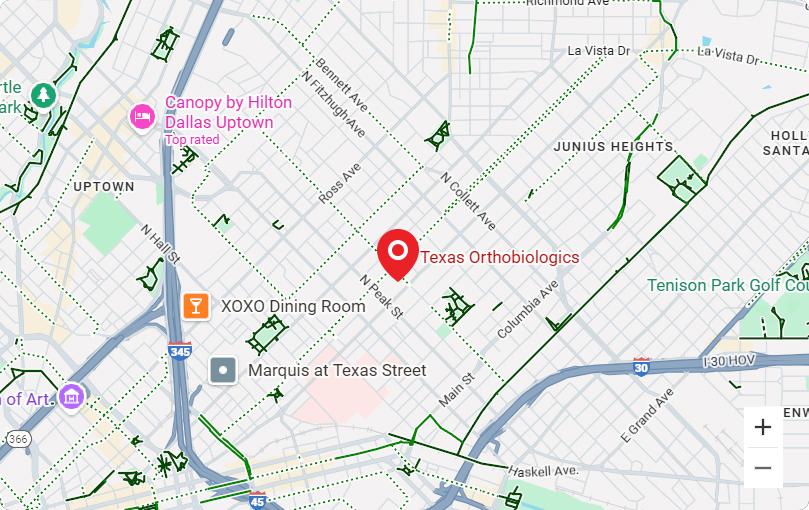
Texas Orthobiologics is at 3310 Live Oak, Suite 202, in Dallas, a short drive from Farmers Branch. Call our office or request a visit online to get started.
Disclaimer: Individual results vary. This article is for educational purposes only and is not medical advice. Please talk with a qualified physician about your specific condition.
References
- Sports & Fitness Industry Association. U.S. pickleball participation. Accessed November 1, 2026. https://sfia.org/research/u-s-pickleball-participation/
- McMillan P, Lake LP, Burkhart A, Reddy E, Hale IC, Grawe BM. The epidemiology of pickleball injuries presenting to US emergency departments. Sports Health. 2026;18(4):749-755. doi:10.1177/19417381251350671. Abstract | Free full text
- Cheng R, Moran J, Kim B, et al. A substantial increase in injuries and hospitalizations associated with playing pickleball from 2020 to 2022. Arthrosc Sports Med Rehabil. 2025;7(2):101067. doi:10.1016/j.asmr.2024.101067. Abstract | Free full text
- Yu J, Yendluri A, Linden GS, et al. Increasing incidence of pickleball injuries presenting to US emergency departments: a 10-year epidemiologic analysis of mechanisms and trends. Orthop J Sports Med. 2025;13(1):23259671241305364. doi:10.1177/23259671241305364. Abstract | Free full text
- Owoeye OBA, Yemm T, Blechle R, et al. Understanding injury patterns and predictors in pickleball players: a nationwide study of 1,758 participants. Sports Med Open. 2025;11(1):100. doi:10.1186/s40798-025-00900-2. Abstract | Free full text
- Swisher J, Burbank K. Injuries and return to play in elite pickleball players: a review of the Professional Pickleball Association Tour. Clin J Sport Med. Published online April 14, 2026. doi:10.1097/JSM.0000000000001464. Abstract
- Lee PM, Nishi R, Obana KK, et al. Pickleball-related geriatric fractures and pediatric equipment-related injuries are increasing in emergency departments across the United States. Arthrosc Sports Med Rehabil. 2025;7(5):101228. doi:10.1016/j.asmr.2025.101228. Abstract | Free full text
- Okhovat A, Ferkel E, Richards SA. Lower extremity injuries in adult pickleball players: a systematic review of injury types, mechanisms, and risk factors. Cureus. 2026;18(5):e108841. doi:10.7759/cureus.108841. Abstract | Free full text
- Myers B, Hanks J. Hip strength, change of direction, and falls in recreational pickleball players. Int J Sports Phys Ther. 2024;19(9):1116-1125. doi:10.26603/001c.122490. Abstract | Free full text
- Ghattas YS, Zeblisky P, Cassinat J, Aceto M, Spindler KP, Cannada LK. Pickleball-related fractures in the United States from 2002 to 2022: an analysis using the NEISS database. Orthop J Sports Med. 2024;12(6):23259671241255674. doi:10.1177/23259671241255674. Abstract | Free full text
- Bellm EJV, Lindish J, Mourad W, Owoeye OBA. Understanding upper extremity injury prevalence and risk in pickleball players: a nationwide survey. JOSPT Open. 2026;4(2):174-180. doi:10.2519/josptopen.2026.0171. Abstract
- Parhar K, Caruso B, Al-Humadi S, et al. The rate of return to play for pickleball is high following shoulder surgery. JSES Rev Rep Tech. 2025;5(4):611-615. doi:10.1016/j.xrrt.2025.06.009. Abstract | Free full text
- Taylor AJ, Braathen DL, Blackburn BE, et al. Can I pickle doc? Return to pickleball and other racket sports after total joint arthroplasty. J Arthroplasty. 2025;40(8):1979-1986.e1. doi:10.1016/j.arth.2025.01.027. Abstract | Free full text
- Myers BA, Hanks J. Positive clinical tests for medial epicondylalgia are more common than tests for lateral epicondylalgia in recreational pickleball players: a cross-sectional study. J Hand Ther. 2025;38(3):540-547. doi:10.1016/j.jht.2024.12.013. Abstract
- Padley JH, Averkamp B, Rieker M, et al. Pickleball-associated Achilles tendon ruptures: shifting Achilles repair demographics. Foot Ankle Orthop. 2026;11(1):24730114261425665. doi:10.1177/24730114261425665. Abstract | Free full text
- Myers B, Hanks J. Effect of a multi-faceted training program on falls in senior pickleball players. Healthcare (Basel). 2025;13(18):2298. doi:10.3390/healthcare13182298. Abstract | Free full text
Don Buford, MD is a board certified orthopedic surgeon. That matters here because the same physician who can offer you an orthobiologic injection can also tell you honestly when an injection is not the right answer and an operation is. A clinic that cannot perform the surgery has no way to make that comparison.
Common questions
- What are the most common pickleball injuries?
- The most common are knee strains and meniscus tears, rotator cuff strains in the shoulder, tennis elbow, wrist fractures from falls, and Achilles injuries. Many come from quick lateral moves and lunges, especially in players who took up the sport later in life.
- Can PRP help a pickleball injury?
- PRP (platelet-rich plasma) is a non-surgical option for some tendon and joint injuries, such as tennis elbow, patellar tendon pain and rotator cuff strains. Whether it fits depends on the exact injury, so it starts with an exam and ultrasound.
- How can I prevent pickleball injuries?
- Warm up for 5 to 10 minutes, wear court shoes with lateral support, and build leg and hip strength. Avoid backpedaling for lobs, and ease into play if you're new or returning from time off.