Class IV MLS Laser Therapy in Dallas, TX
The MLS M7 is one of the most advanced robotic laser therapy systems available.
Clinically validated, drug-free pain relief and healing - powered by patented dual-wavelength laser technology and delivered with robotic precision.
What Is a Class IV Laser?
Medical lasers are classified by the FDA based on power output and biological effect. Class IV lasers - the most powerful therapeutic category - penetrate deeply into the body, reaching joints, tendons, and muscles that lower-class devices cannot access. They stimulate the body's natural repair processes at the cellular level through a process called photobiomodulation (PBM).
| Class | Power Output | Common Examples | Clinical Use |
|---|---|---|---|
| Class I | < 0.39 mW | Laser pointers, barcode scanners | Completely safe - energy too low to cause tissue damage |
| Class II | 0.39 – 1 mW | Low-power laser pointers | Safe under normal use; blink reflex protects the eye |
| Class IIIB | 1 – 500 mW | Cold lasers, older LLLT devices | Superficial tissue penetration - limited depth and power |
| Class IVMLS® | > 500 mW | MLS® Therapy Lasers, surgical lasers | Deep tissue penetration - high therapeutic power with proper protocols |
How Does It Work? The Science of Photobiomodulation
The MLS Dual-Wavelength System
MLS® precisely synchronizes two different wavelengths simultaneously - something no other therapy laser can do. Each targets a different aspect of pain and healing:
Stimulates blood flow and lymphatic drainage, inducing reabsorption of fluid buildup and modulating inflammatory mediators
Affects pain transmission at nociceptors and afferent nerve fibers, raising the cell's pain stimulation threshold
When synchronized by the patented MLS system, these wavelengths produce an immediate and long-lasting synergistic effect that neither achieves alone - faster pain relief, more effective inflammation control, and deeper tissue penetration, all while maintaining a safety profile comparable to lower-class lasers.
The History of Laser Therapy in Orthopedics
Six decades of scientific discovery, clinical research, and technological innovation.
First Laser Invented
Theodore Maiman builds the world's first working laser - a ruby laser - at Hughes Research Laboratories. This breakthrough would eventually transform modern medicine.
Therapeutic Laser Research Begins
Hungarian physician Endre Mester discovers that laser light accelerates wound healing and tissue regeneration - the birth of laser therapy in medicine.
Low-Level Laser Therapy (LLLT) Emerges
LLLT gains traction across Europe and Asia for musculoskeletal pain. Early clinical research establishes the foundations of photobiomodulation (PBM).
FDA Begins Classifying Therapy Lasers
The FDA establishes formal laser classifications (Class I–IV), giving laser therapy regulatory credibility in the United States.
Class IV Lasers Enter Orthopedics
High-power Class IV lasers emerge for treating joints, tendons, and spinal structures - opening orthopedics and sports medicine to laser therapy.
MLS® Technology Patented
ASA S.r.l. (Italy) patents the Multiwave Locked System (MLS) - the first technology to precisely synchronize dual infrared wavelengths for synergistic therapeutic effects.
FDA Clearance for MLS® Laser Therapy
MLS Laser Therapy receives FDA clearance, backed by controlled clinical trials at the University of Turin and University of Padova.
Robotic Laser Delivery Introduced
The M6 robotic laser launches - the world's first robotic therapy laser - enabling automated scanning without a dedicated technician.
MLS M7 - Most Advanced Robotic Laser Launched
The MLS M7 launches with dual robotic arms and advanced scanning algorithms. Texas Orthobiologics offers this system to patients.
Orthobiologic Integration Becomes Standard of Care
Real-world data from 6,850+ patients confirms MLS Laser + biologics (PRP/BMAC) produces significantly better outcomes than biologics alone.
Common Uses in Orthopedics & Regenerative Medicine
At our Dallas clinic, we use MLS Laser Therapy to treat a wide range of conditions Class IV MLS Laser Therapy is effective for a wide range of acute and chronic musculoskeletal conditions.
Knee Osteoarthritis
Reduces joint inflammation and pain, improving mobility without surgery. Many patients see meaningful relief within the first few sessions.
Low Back & Spine Pain
Addresses acute and chronic lumbar pain at the cellular level - effective for disc-related pain, muscle spasm, and degenerative changes.
Shoulder Pain & Rotator Cuff
Treats rotator cuff tendinopathy, bursitis, and impingement syndromes by stimulating tissue repair and reducing chronic inflammation.
Tendinopathy
Particularly effective for Achilles tendinopathy, patellar tendinopathy, lateral epicondylitis (tennis elbow), and other stubborn tendon conditions.
Post-Surgical Recovery
Accelerates healing after orthopedic surgery - reducing post-op pain/swelling, minimizing scar tissue, and shortening recovery timelines.
Sports Injuries
Enables faster return to play for athletes with muscle strains, ligament sprains, stress reactions, and acute soft tissue injuries.
Hip Pain & Arthritis
Penetrates deep tissue to reduce hip joint inflammation, address bursitis, and support healing in degenerative hip conditions.
Nerve Pain (Neuropathy)
Modulates nerve pain transmission for peripheral neuropathy, radiculopathy (pinched nerve), and post-surgical nerve sensitivity.
PRP & BMAC Enhancement
Amplifies the cellular response to orthobiologic injections. MLS before and after PRP or BMAC accelerates the regenerative cascade for faster, more sustained results.
Carpal Tunnel Syndrome
Reduces median nerve inflammation and compression - often providing significant relief and potentially avoiding surgery for mild-to-moderate cases.
Plantar Fasciitis
Resolves heel and arch pain by stimulating tissue repair in the plantar fascia - one of the most stubbornly painful foot conditions.
Muscle Strains & Contusions
Speeds recovery from acute and chronic muscle injuries through enhanced cellular repair and reduced localized inflammation.
This is not an exhaustive list. Dr. Buford evaluates each patient individually to determine the most appropriate treatment plan.
The Advantages of the MLS® M7 Laser System
Not all Class IV lasers are the same. The MLS® M7 - represents a significant leap forward.
Available exclusively at Texas Orthobiologics, Dallas, TX
World's Most Advanced Robotic Therapy Laser
TechnologyThe M7 features dual robotic arms that automatically scan the treatment area, delivering precise, uniform energy distribution - without requiring a dedicated technician.
Patented Dual-Wavelength Synchronization
TechnologyOnly the MLS system can simultaneously synchronize 808nm and 905nm wavelengths, producing a synergistic effect - anti-inflammatory AND analgesic action - that neither wavelength achieves independently.
Superior Safety vs Other Class IV Lasers
SafetyThe patented MLS pulse modulates energy output to minimize thermal tissue damage - a risk with many other high-power Class IV lasers. Class IV efficacy with Class IIIB safety characteristics.
Deep Tissue Penetration
EfficacyReaches joints, tendons, discs, and deep musculoskeletal structures that cold lasers and LED devices cannot access.
FDA Cleared
RegulatoryCleared by the FDA for pain relief and inflammation - backed by 40+ years of research including controlled clinical trials by major academic institutions.
Fast, Painless Sessions - No Downtime
Patient ExperienceCompletely painless and non-invasive. Sessions typically last 5–15 minutes per area. Resume normal activities immediately - no recovery period required.
Proven Orthobiologic Synergy
RegenerativeWhen combined with PRP or BMAC, MLS Laser Therapy amplifies the regenerative healing cascade - producing greater pain reduction and functional improvement at 12 and 24 months vs. biologics alone.
No Known Side Effects
SafetyNo known negative side effects and non-habit forming - a safe, sustainable alternative to NSAIDs, corticosteroids, and opioid pain medications.
Clinical Research & Human Outcomes
The MLS® M7 uses the same patented dual-wavelength technology validated in the studies below. Click any study to expand details.
Disclosure: Studies listed represent a selection of published and real-world clinical evidence supporting MLS Laser Therapy. Individual outcomes may vary. DataBiologics data is patient-reported and not independently peer-reviewed. This content is for educational purposes only and does not constitute a guarantee of results.
Frequently Asked Questions
What conditions does Class IV MLS Laser Therapy treat?
Class IV MLS Laser Therapy is commonly used to treat arthritis, tendonitis, bursitis, sports injuries, muscle strains, and chronic joint pain. It may also help reduce inflammation and support healing after certain orthopedic procedures.
How many MLS laser sessions will I need?
Most acute conditions are treated with a package of 6 sessions; chronic conditions usually need 10 to 12. Each session takes 5 to 15 minutes per area, is painless, and requires no recovery time, so appointments fit easily around a working day. The exact number is set after Dr. Buford examines you, and depends on the condition being treated and how long it has been present.
Is Class IV laser therapy safe?
Yes, Class IV laser therapy is generally considered safe when administered by trained healthcare professionals. The treatment is non-invasive, drug-free, and most patients experience little to no discomfort during the procedure.
Does MLS laser therapy work for chronic low back pain?
MLS laser therapy may help reduce inflammation and improve circulation in the tissues contributing to chronic low back pain. Many patients report decreased pain and improved mobility as part of a comprehensive treatment plan.
Can MLS laser therapy replace surgery for my knee pain?
Laser therapy may help manage symptoms and improve function for some patients with knee pain. However, it does not replace surgery when significant structural damage or advanced joint disease requires surgical intervention.
How does MLS laser therapy work with PRP or regenerative treatments?
MLS laser therapy is often used alongside regenerative treatments such as PRP to support the body's healing response. The combination may help reduce inflammation, improve comfort, and enhance recovery following injections.
How much does MLS laser therapy cost, and is it covered by insurance?
Robotic MLS Laser Therapy is $150 per session at Texas Orthobiologics, and it is a self-pay treatment - laser therapy for musculoskeletal pain is not currently covered by most United States insurance plans, Medicare or Medicaid. That puts a 6-session package for an acute problem at $900, and a 10 to 12 session course for a chronic condition at $1,500 to $1,800. Call (877) 777-8883 to discuss your own treatment.
How is the MLS M7 different from other laser therapy devices?
Only the MLS system synchronizes two wavelengths simultaneously - 808 nm continuous wave for inflammation and 905 nm pulsed for pain relief - which is the patented Multiwave Locked System technology. The M7 delivers them through dual robotic arms that scan the treatment area automatically, giving even coverage without a technician holding a probe. The patented pulse also limits heat, so it carries Class IV power with a safety profile closer to a Class IIIB device.
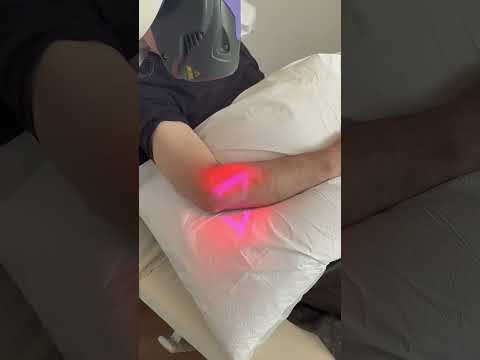
See MLS Laser Therapy in Action
These videos provide an overview of how MLS Laser Therapy works and how it integrates into orthobiologic treatment protocols at Texas Orthobiologics.



MLS® is a registered trademark of ASA S.r.l. This page is for educational purposes only and does not constitute medical advice. Individual results vary.
Location
& Directions
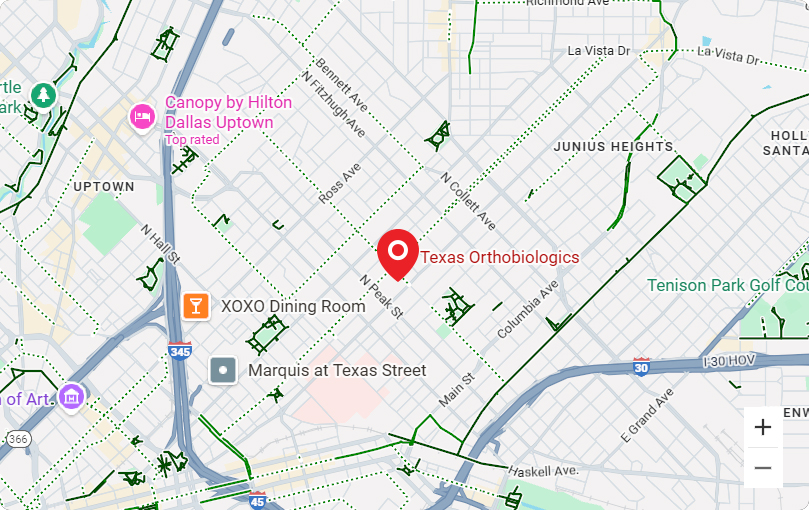
Texas Orthobiologics
Don Buford, MD
3310 Live Oak
Ste 202
Dallas,
TX 75204
(877) 777-8883 (Dallas)
Monday - Friday: 8:30 am - 4:00 pm